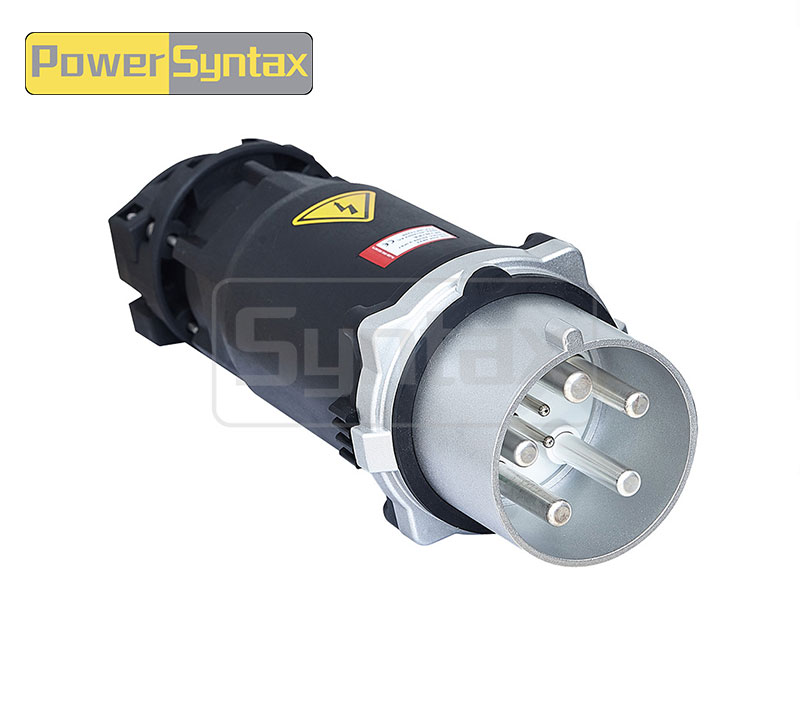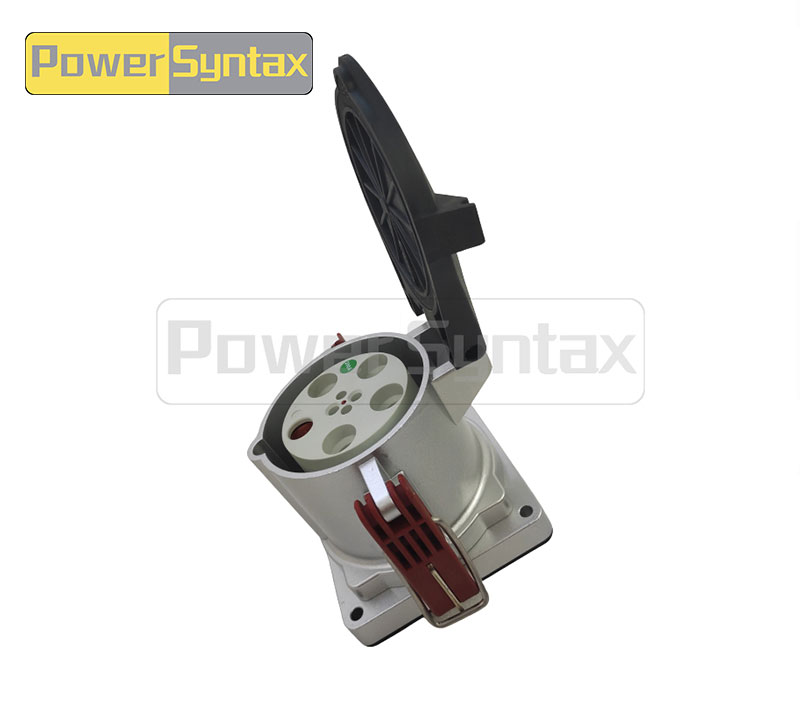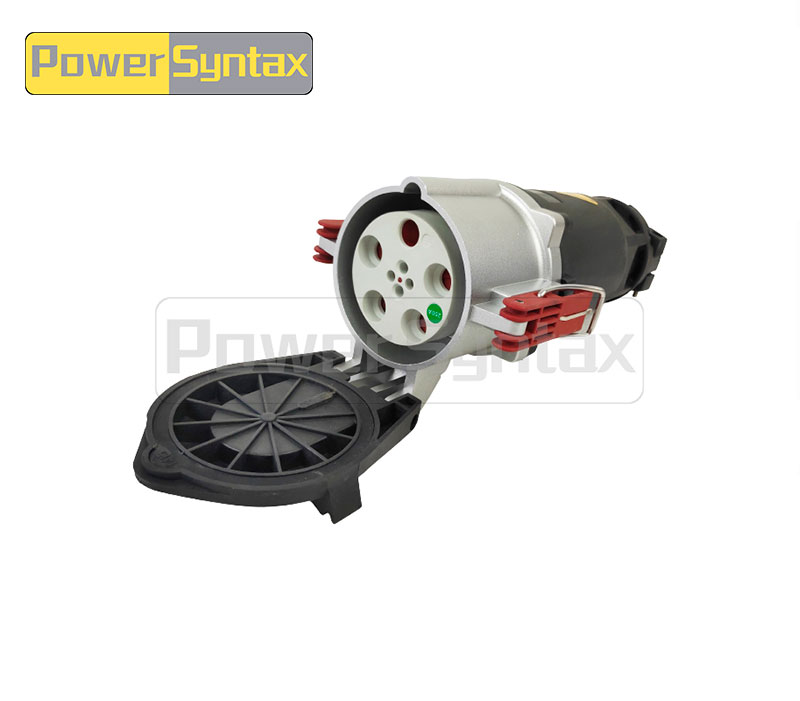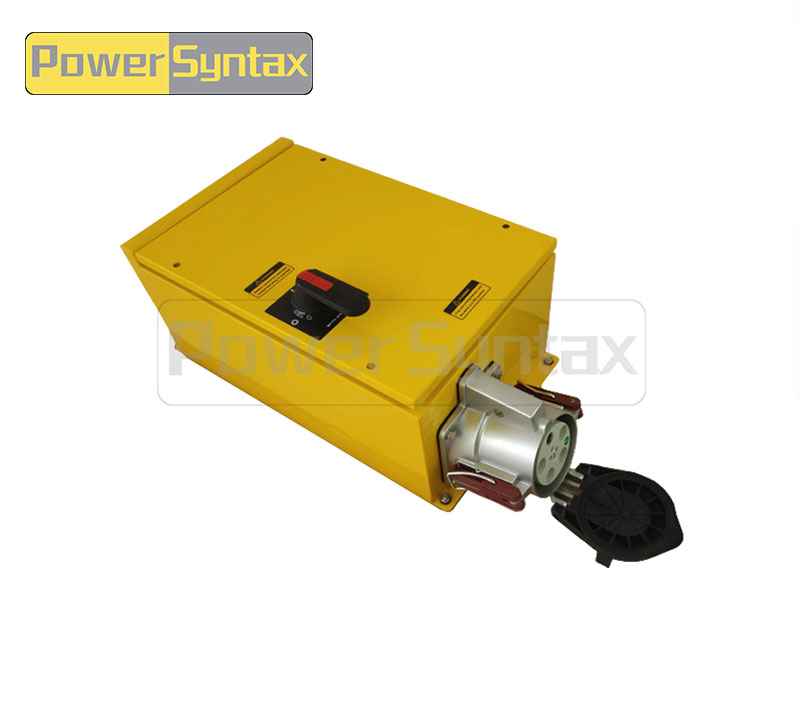

Does a CVT Series High Current Plugs & Sockets connector need a screw thread to stay locked?
Stop wrestling with seized threads: why push‑pull changes the daily rhythm
The CVT series adopts a Push & Pull locking system. Push to connect until it clicks. Pull the sleeve to disconnect. No threads to cross, no tools required, no risk of overtightening. A CVT Series High Current Plugs & Sockets assembly using this mechanism can be mated and unmated thousands of times without wear to the locking dogs.
How push‑pull survives high vibration
On a port crane or mining vehicle, the connector is not static. It bounces. A screw ring that works fine in a lab can vibrate loose in the field. The push‑pull mechanism on the CVT series maintains mechanical retention and electrical contact integrity under constant vibration. Internal latching uses stainless steel components that resist wear across thousands of cycles.
What the “click” tells you
A well‑designed push‑pull connector provides audible and tactile feedback when fully seated. In noisy environments (over 85 dBA), operators can still feel the engagement through the handle. No click means the dogs have not fully engaged – the connection may pull apart under cable strain.
Current and voltage: 420A at 1000V – enough for what?
The CVT series is rated for up to 1000V AC and 420A in its highest configuration (420A Plug - Mobile Angled Type). That is solidly industrial.
| Rating | Value | Typical Application |
|---|---|---|
| Voltage | up to 1000V AC | Mining substations, port cranes, heavy machinery |
| Current (max) | 420A | Primary feeds to mobile equipment, large workboats |
| Current (other) | 160A / 250A | Smaller feeders, auxiliary circuits |
A 420A, 400V three‑phase connection delivers approximately 290 kVA – enough to run a medium‑port crane or a full mining conveyor system. The 160A and 250A variants serve smaller feeders on the same site, allowing a standardized CVT Series High Current Plugs & Sockets family across different current tiers.
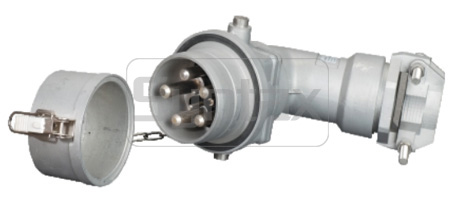
The 420A Plug - Mobile Angled Type: why angle matters
The product figure name specifies the 420A Plug - Mobile Angled Type. On mobile equipment – a mining haul truck, a locomotive, a port straddle carrier – cables drag along the ground and enter the equipment at an angle. A straight plug puts bending stress on the cable entry, leading to premature jacket failure. An angled plug aligns the cable exit with the natural cable direction, reducing strain.
IP66: what it means when the connector lives in a washdown zone
IP66 means protected against powerful water jets. On a dock, that means surviving pressure washing. In a mine, it means surviving high‑pressure hosing after each shift. A CVT Series High Current Plugs & Sockets connector uses chloroprene rubber (CR) seals at three points: around each pin, between the shell halves, and at the cable entry.
Where IP66 falls short – and why IP67 is not always better
IP66 handles jets. IP67 handles temporary immersion (30 minutes at 1 metre). But on a mobile connector that gets dragged through puddles, IP67’s immersion test does not replicate the real wear – the seal must survive scraping against the ground. The CVT series uses recessed seal lips that do not contact the ground when the plug is laid down.
Why the cable entry seal fails first
The main housing seal is large and robust. The cable entry seal must accommodate different cable diameters. A gland that fits a 30mm cable will not seal a 25mm cable. The CVT series uses interchangeable sealing inserts for different cable diameters – a simple field change that prevents the most common water ingress path.
Materials: cast aluminium, silver‑plated contacts, and why “marine‑grade” matters
The CVT series shell is quenched cast aluminium (AS7G) with an Alodine conductive oxidation coating. AS7G resists saltwater corrosion better than standard die‑cast aluminium. The Alodine coating provides electrical conductivity while preventing galvanic corrosion between the aluminium shell and the stainless steel locking mechanism.
Contacts are silver‑plated copper alloy. Silver offers the lowest contact resistance but tarnishes in marine atmospheres when unmated. The CVT series is designed for frequent mating – the wiping action during connection cleans the silver surface, maintaining low resistance.
Stainless steel fasteners: a small detail that saves big downtime
Every exposed fastener on the CVT series is stainless steel. That is not true on cheaper connectors, where plated steel screws rust after one season. Rusted screws mean you cannot open the connector for inspection or cable replacement.
Three field tests to run before you buy
Before deploying CVT series connectors across a site, run these three checks on a sample unit.
Seating force consistency test
Mate and unmate the connector 20 times. The force to seat and release should remain consistent. If it increases after 10 cycles, the locking dogs are wearing or dirt is accumulating in the mechanism.
Contact resistance measurement
At 420A, a 1mΩ interface resistance dissipates 176W of heat – enough to soften seals and accelerate oxidation. Use a four‑wire Kelvin measurement on a mated pair. A new CVT series connector should measure below 0.2mΩ per pole.
Cable retention pull test
Crimp a 95mm² cable into the 420A contact. Insert into the housing. Apply a 200N pull force. The cable must not slip. Measure again after 10 matings – retention should not degrade.
Who actually needs a 420A push‑pull connector?
Not every site needs 420A. The CVT series includes 160A and 250A variants for smaller loads. The 420A version serves:
-
Port mobile cranes – Primary power for rubber‑tyred gantry cranes that move between rows of containers. A 420A, 400V feed handles peak hoist and travel loads.
-
Mining haul truck battery charging – For battery‑electric trucks, 420A at 1000V DC (with appropriate DC rating) can recharge a 400kWh pack in about an hour.
-
Shipyard mobile substations – Temporary power for dry dock work where a screw‑lock connector would corrode within weeks in the salt atmosphere.
How the CVT series fits into Androi Elec's industrial connector range
Androi Elec manufactures the CVT series alongside the PS series (160‑630A, solid pin, 10‑year warranty) and JD‑1 series (up to 1000A DC). The CVT series sits in the middle of the range: higher current capacity than residential connectors, with the push‑pull mechanism that PS series lacks, but lower maximum current than JD‑1.
For a site that needs frequent connection cycles – multiple times per shift – the CVT series is the correct choice. For a permanent installation where the connector is mated once and left for months, a screw‑lock or bolted connection may be simpler and cheaper. The CVT series is optimized for applications where operators connect and disconnect under time pressure and adverse conditions.